Browse Publications

Media Centre Ros Abercrombie: 'What I'll carry with me from Artlands 2026'
A few Saturdays after Artlands, I’m at home reading Robin Wall Kimmerer’s Gathering Moss. She writes about the countless synchronicities that bring us to a particular place at a particular moment, and the relationships that make our lives possible.
After the best part of a year with Artlands 2026 occupying so much of my thinking, I find myself returning to this idea. Not everything that matters can be planned. Sometimes, what matters most is what becomes possible when we bring people together, pay attention to what is already there and make room for something new to emerge.
I’m still finding the words for what we held together at Twin Waters, on Kabi Kabi Country, where the Maroochy River meets the ocean. Our first Artlands in Queensland in 20 years, it was a gathering shaped by its place, its people and the relationships that brought it to life.
Artlands is, of course, a work event. Delivering it is my job. But it has always been more than a conference or a date on the sector calendar. It is an expression of our values, a way of working alongside different knowledge systems and an opportunity to consider how we lead when the answers aren't straightforward.
This year, we built the gathering around a simple idea: Water Connects Everything.
We wanted water to be a through line rather than simply a topic. A way of opening up conversations about Country, culture, creativity, industry and policy, and of recognising the relationships between things that are too often considered separately.
What I didn't fully anticipate was how this idea would extend beyond the program itself and begin to shape the way we worked together.
Governance is something we do together
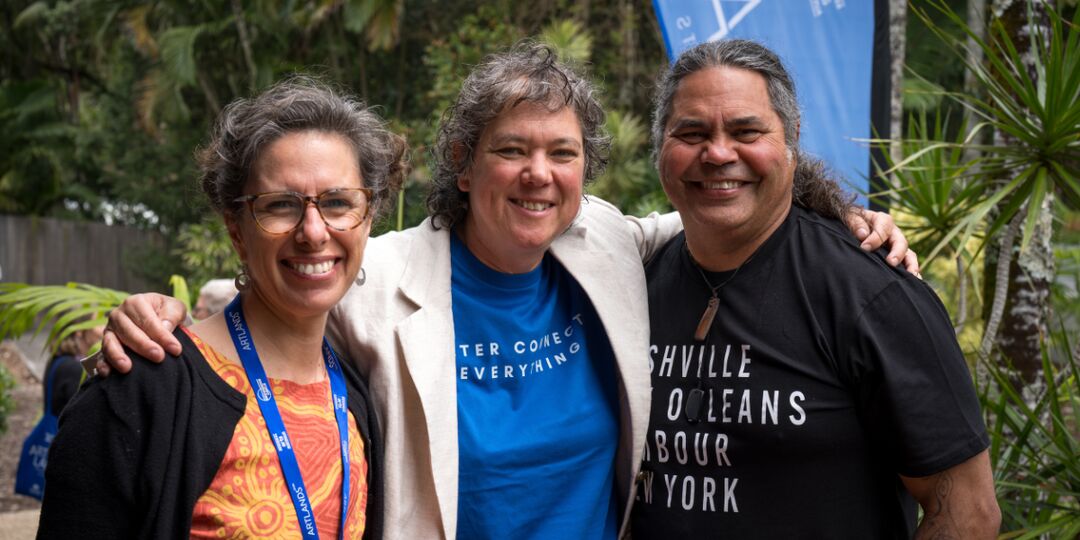
Over three days, many different systems of knowledge, care and responsibility came together. Our First Nations Knowledge Circle co-designed the gathering from the outset. Kabi Kabi Traditional Custodians walked alongside us through Welcome and Closing, on Country and throughout First Nations Day. Tin Camp Studios held cross-cultural protocols. Deadly Weavers held the wellbeing space. A First Nations Lounge, a quiet sensory space, eco-dyeing, qigong and walks on Country offered different ways to participate, connect and find our place within the gathering.
Facilitators, wardens, producers, delegates and Queensland partners each played their part.
You could try to map all of this on an organisational chart, but it wouldn't tell the whole story. These relationships weren't linear. They moved in every direction, responded to one another and changed as the gathering unfolded. Some had been years in the making, built slowly through trust, reciprocity and a willingness to keep showing up.
We didn't work from a script or a perfectly fixed order of events. We worked within agreed guardrails, with care and intention, and made decisions together as the days unfolded. As I joked in one planning meeting, we'd know the program after the event.
There was truth in that joke.
This wasn't about abandoning preparation or responsibility. It was about understanding that good preparation doesn't require us to control every outcome. It can create the conditions for people to exercise judgement, respond to one another and take responsibility for what happens next.
What emerged was something I think of as living governance. Not an advisory group or a committee sitting alongside the work, but relationships actively shaping the work itself. You could see it on the stages, in the weaving space, around the eco-dyeing table and in the conversations happening between sessions.
It has left me thinking about how often our institutions ask people to fit their knowledge into systems that were designed without them. What might change if we began with relationships instead? If we understood governance not only as a structure of authority, but as an ongoing practice of listening, accountability and shared responsibility?
I don't have a neat answer. But I think we have a responsibility to keep asking the question.
The questions that stay with us
The best gatherings don't simply give us information to take home. They leave us with questions that continue to work on us.
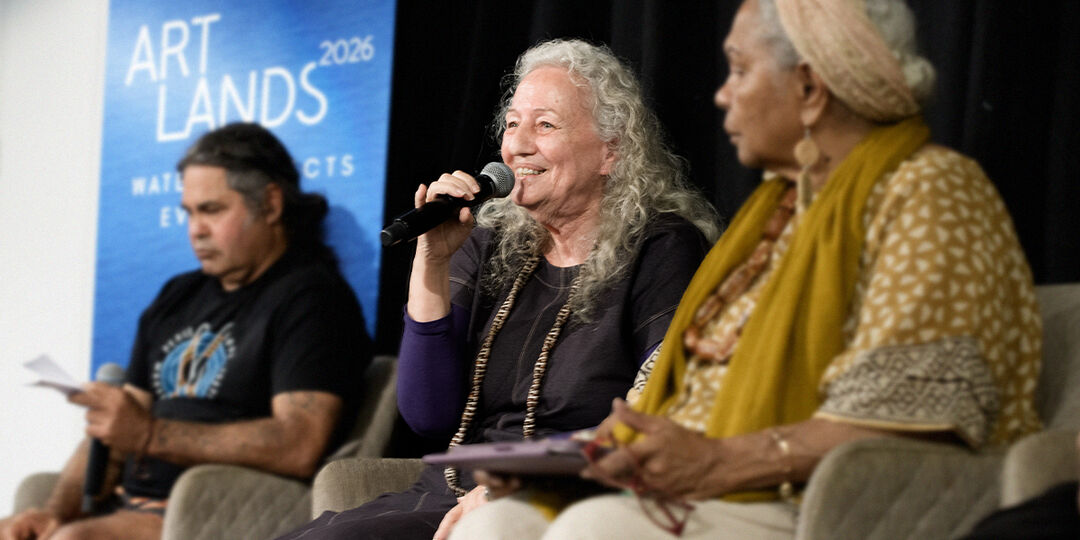
At Artlands, Aunty Professor Anne Poelina asked: “What does justice look like when a river asks for justice?” She called for a coalition of hope and reminded us that young people aren't simply the future. They are here now, with needs, knowledge and contributions that demand our attention now.
Aunty Helena Gulash asked what younger Kabi Kabi people would inherit from the development decisions being made today. Bev Hand spoke about caring for water on the mountain so that those downstream have an easier job looking after their part. Malachai Clements spoke about the people, skills and stories flowing out of regional communities, asking a question I suspect many of us will continue to sit with: “How do we build communities worth returning to?”
These are questions about much more than the arts. They are questions about who gets to shape our places, whose knowledge is valued, what we choose to protect and what kind of future we are making possible for the people who come after us.
Aunty Gail Mabo took us onto the family veranda behind her father's fight for land rights. At eight years old, she was counting chairs and making tea so her parents could stay in the conversation. Her instruction to us was beautifully direct: “Never miss an opportunity to talk to a child.”
It was a reminder that the work of cultural change happens in the everyday, across generations and in the spaces where people are invited to participate.
And Danielle Harvey asked: “What is possible now?”
I love the immediacy of that question. It doesn't ask us to wait until the next funding round, the next strategy, the next election or the next generation of leaders. It asks what we can do with what we know, who we know and the opportunities in front of us.
The invitations delegates made in response were not abstract expressions of goodwill. They were practical openings for future collaboration and action. What matters now is how we honour those invitations and what we do with them.
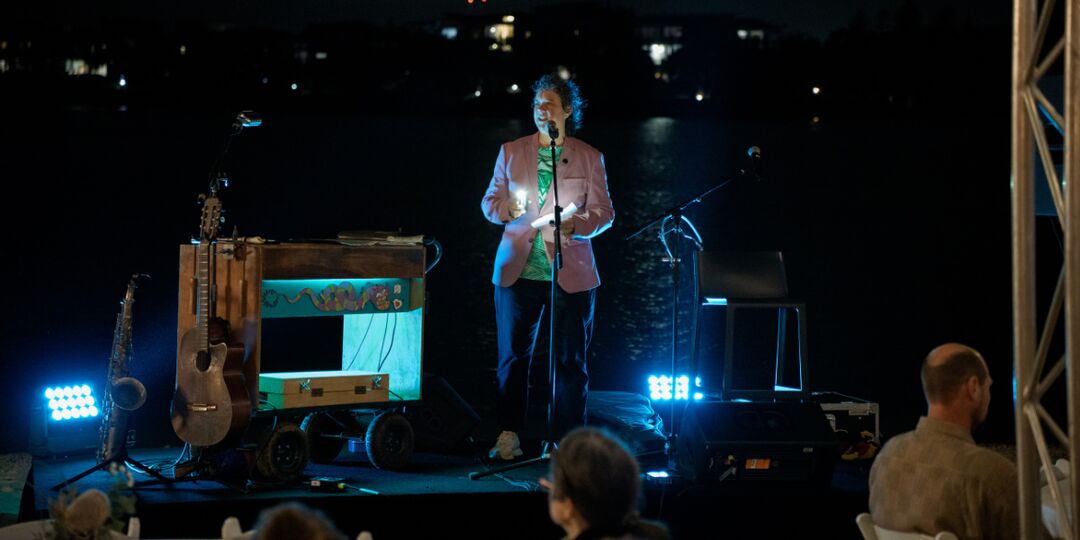
Learning to be more like water
One idea I keep returning to is that we might learn to be more like water: fluid, responsive and permeable, finding new pathways without losing sight of what sustains us.
Water connects places that might otherwise appear separate. It moves through systems, carries knowledge and life, responds to the conditions around it and reshapes the landscape over time. It also reminds us that what happens upstream affects everyone downstream.
There is something important here for the regional arts sector.
Regional artists and arts organisations rarely work in isolation. They are often at the intersections of health, education, local government, environmental care, youth services, agriculture, migration and community development. They create spaces where people who might not otherwise meet can encounter one another, share knowledge, work through differences and imagine possibilities together.
This work is sometimes described as an additional benefit of the arts, something that happens alongside the making of art. I think we need to recognise it for what it is: a vital part of the cultural and civic infrastructure of regional Australia.
When we invest in artists, we invest in more than creative output. We invest in the capacity of communities to make meaning, build relationships, navigate change and imagine futures that they can shape together.
That doesn't mean asking artists to solve every problem or expecting creativity to compensate for under-resourced services and communities. It means recognising the value of artistic practice in its own right, while also understanding what becomes possible when the arts are meaningfully connected to the wider systems that shape our lives.
If water connects everything, then we need to pay closer attention to the places where those connections are already happening, and to the conditions that allow them to flourish.
What we carry forward
Artlands doesn't end with a set of recommendations or a report that neatly captures three days of conversation. Its value lives in the relationships it builds, the questions it leaves us with and the ripples that travel beyond the gathering.
That doesn't mean the work is finished when everyone goes home. In many ways, that's when the next part begins.
For Regional Arts Australia, it means continuing to create opportunities for the sector to come together, supporting the relationships that make collaboration possible and advocating for the recognition and resourcing that regional artists and communities need.
It also means paying attention to how we do this work. The processes we use, the voices we invite in, the decisions we make and the relationships we nurture are not separate from the outcomes we hope to achieve. They are part of those outcomes.
I want to acknowledge the Kabi Kabi people for welcoming us onto Country, and Aunty Helena Gulash for her Welcome. Thank you to our First Nations Knowledge Circle, our speakers, facilitators and delegates, and to everyone who contributed their knowledge, care and energy to the gathering.
Thank you to the Tim Fairfax Family Foundation, the Regional Arts Fund, the Australian Government's Office for the Arts, the Regional Arts Service Network and the Sunshine Coast Creative Alliance for supporting a gathering that made room for emergence, complexity and connection.
And to the team behind the scenes, across Regional Arts Australia, the Regional Arts Service Network and our hosts at Twin Waters, thank you. Across 36 hectares of bushland and lagoon, you helped create the conditions for people to come together in ways that will continue to matter long after the event itself. Gatherings like this may look effortless to those attending, but they are made possible by an extraordinary amount of work, care and commitment that often goes unseen.
I return to Kimmerer's writing and the thought that brings me back to where I began. We arrive at particular places and moments through countless connections, many of which we may never fully understand. Our responsibility is to notice them, care for them and consider what they make possible.
Artlands 2026 reminded me that the future of regional Australia will not be shaped by any one organisation, sector or knowledge system working alone. It will be shaped by how we learn to work together, how we make room for different ways of knowing and how willing we are to imagine something beyond the structures we have inherited.
As I've said before, and will keep saying, creativity isn't separate from the systems shaping regional Australia's future. It's one of the ways we make sense of them, challenge them and begin to change them.
Thank you for being part of that work.
Ros Abercrombie
Executive Director, Regional Arts Australia