Browse Publications

Case Studies Ben Andrews Designing Immersive Art Through Vestibular Access | National Regional Arts Fellowship (2025)
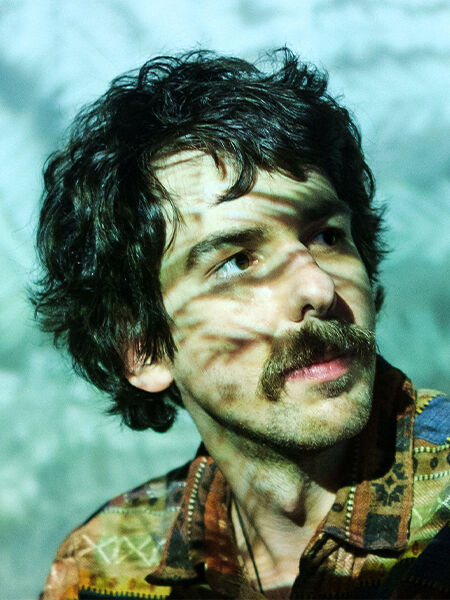
For new media artist Ben Andrews, immersive and interactive art has always been a space of possibility but also one of tension.
Working across virtual reality, mixed reality, multi-sensory installation, interactive projection and generative systems, Ben has spent years exploring how audiences move through, respond to and participate in creative environments.
His National Regional Arts Australia Fellowship is allowing him to approach that field from a deeply personal and often overlooked perspective: vestibular accessibility.
The National Regional Arts Fellowship Program is a strategic project supported by the Australian Government Regional Arts Fund and delivered by Regional Arts Australia. Fellowships provide guaranteed income for regional artists and arts workers to develop work, skills, networks, or research.
Ben lives with vestibular migraine, a disability that affects how his body reads internal and external movement.
“It affects how my body reads and understands movement,” he explains. “It kind of leads to a lot of motion sickness and vertigo and dizziness… what I typically call a misperception of motion.”
His fellowship is centred on a question Ben sees as both urgent and creatively rich: how can interactive and immersive works be designed, exhibited and experienced from a position of vestibular access?
“Interactive works almost always involve some form of movement, or motion, or moving bodies within them,” he says. “But rarely do we consider access in movement beyond physical movement, beyond mobility.”
For Ben, the issue is not a lack of care from artists or institutions, but a lack of awareness. He notes that vestibular conditions are common, yet “vestibular accessibility is so rarely talked about, let alone considered on institutional, technical or conceptual levels.”
The fellowship has given him time to bring that conversation into focus, through research, experimentation and creative prototyping.
A key part of the project is Ben’s developing collaboration with vestibular specialist Dr Shin C. Beh, whose clinical expertise is helping inform the work. Ben hopes this will support outcomes that are meaningful not only within arts and culture, but potentially across broader technical and clinical contexts.
“I really want to emerge with the kind of prototypical guide to best practices of vestibular access within the immersive and interactive sector,” he says.
At the heart of Ben’s approach is a reframing of accessibility, not as an add-on, but as a generative force. This approach is now taking Ben’s work in this space to reaching an international stage.
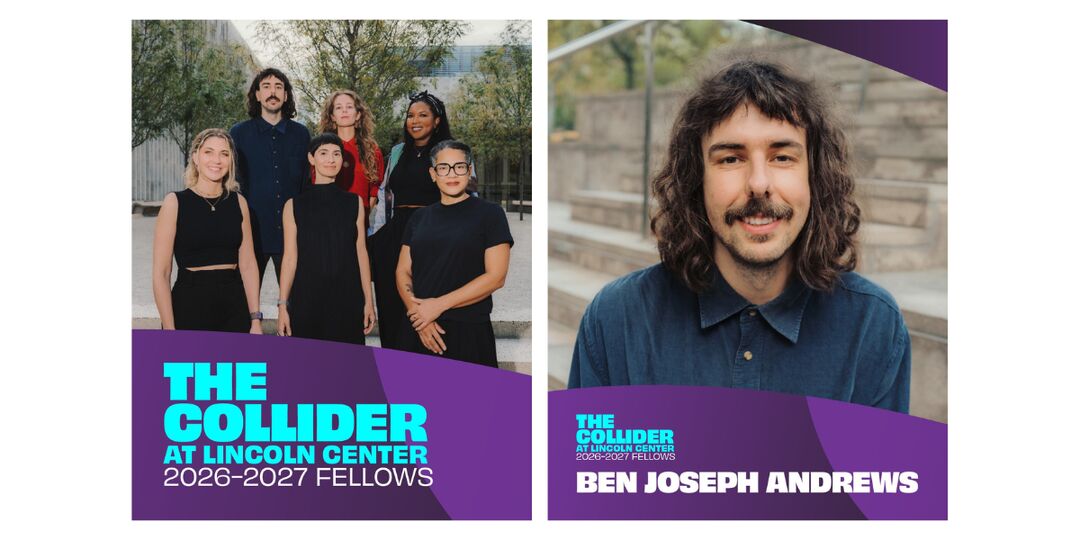
In October, Ben has been selected as a Fellow in Lincoln Center’s Collider Fellowship in New York City, a nine-month residency that brings together six artists working at the vanguard of their fields to explore how technology can enhance and deepen in-person performing arts experiences.
Fellows are supported in open-ended exploration, free from the usual commission expectations of a final product or project, and receive studio space at Lincoln Center and at collaborator Onassis ONX, a global platform for new media art and immersive experiences, along with stipends, artistic and administrative support, and regular opportunities to collaborate with one another.
“Often when we think about accessibility, we might think of it purely in functional or pragmatic terms,” Ben shares. “My approach is looking at this differently. It’s looking at how can we build access into the foundational layers of an idea or a concept.”
He describes access as “a creative affordance, rather than as a constraint”, opening up new artistic possibilities. What might an immersive work about movement look like if it asks little or no movement from its audience? How might audiences be empowered to control motion within a work? Could glitches, seams and friction become part of the aesthetic language of access?
“Disability is quite a seamed experience,” Ben says. “So this opens up a lot of creative questions.”
Alongside research, Ben has already begun building experimental tools and prototypes, some diagnostic, some speculative, and some designed to prompt artists to think differently about motion and access. He has also been expanding creative inclusion tools through a vestibular lens, exploring how they might become a playful way to begin conversations with artists and organisations who have not considered vestibular access before.
For Ben, working regionally adds another layer of purpose. While new media practice is often concentrated in major cities, he is passionate about developing this inquiry from a regional base.
“I am really proud of practicing the art that I do in a regional area,” he says. “I’m really excited and passionate about how to cultivate this kind of creative practice and artistic inquiry in a space that’s not a big city.”
The fellowship, he says, has created space for research, experimentation and play and for work that could have lasting impact beyond his own practice.
“The great thing about the fellowship is that it really gives me time to do a lot of research, but also to play,” Ben says. “Then kind of account for what comes out of that.”